

Discover Agios Lavrentios of Pelion, one of the most historic and picturesque traditional settlements. See the attractions, the Music Village, recommendations for food, accommodation, and hiking.
Pelion, the mythical mountain of the Centaurs, is a place blessed with lush vegetation, running waters, and villages that seem to have popped out of the pages of some old fairy tale. Among these residential gems, Agios Lavrentios of Pelion holds an entirely distinct and majestic place, as it is considered one of the oldest, most picturesque, and most well-preserved traditional settlements in the region of Magnesia.
Agios Lavrentios
Built at an altitude of about 600 meters on the southern slopes of Western Pelion, Agios Lavrentios offers a unique experience of returning in time, where the medieval atmosphere meets the unparalleled natural beauty of the Greek countryside. Its privileged geographical location gives visitors a panoramic and captivating view of the Pagasetic Gulf and the city of Volos, making it an ideal destination for those seeking absolute tranquility, cultural refinement, and authentic contact with Pelion nature. In this detailed article we will wander together through its cobbled stone paths, learn about its rich history, and analyze everything you need to know to organize the perfect getaway to this hidden and priceless treasure of the mountain.
The historical path of Agios Lavrentios is deep and closely linked to the founding of the Holy Monastery of the same name, which constituted the spiritual and residential core around which the entire present settlement gradually developed. History takes us back to the 14th century, specifically around 1378, when the Byzantine monk Lavrentios, coming from the Great Lavra of Mount Athos, arrived in the area and built the monastery on the ruins of an older temple. Over the years, olive growers, craftsmen, and livestock breeders began to settle around the monastery, gradually creating a thriving settlement that took its name from the founder of the monastery. During the period of Ottoman rule, Agios Lavrentios experienced immense economic, intellectual, and commercial growth, as its residents were highly successful in olive cultivation, silk production, and trade with major European cities, a fact that allowed the creation of a wealthy and educated middle class that actively supported the Greek revolution of 1821.
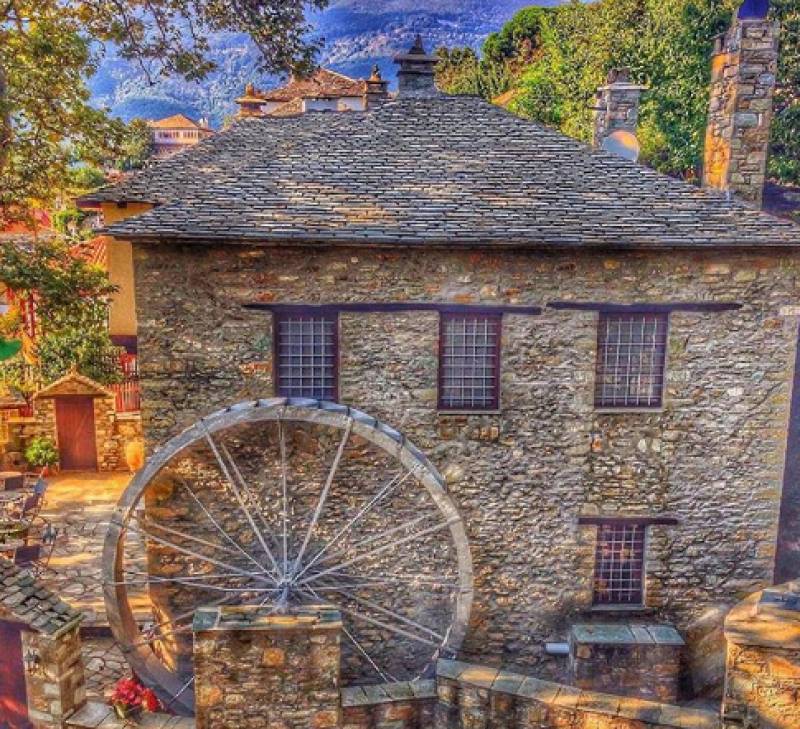
The architectural identity of Agios Lavrentios is one of the most impressive elements of the village, making it a living and open museum of Pelion building art that is strictly protected by law as a traditional settlement. As one walks along its labyrinthine and uphill cobbled paths, one comes face to face with imposing, three-story mansions built during the 18th and 19th centuries by Epirote and local stone craftsmen. These mansions are characterized by their stone, fortress-like bases, the wooden sachnisia on the upper floors, and the roofs made of Propan slate that harmonize fully with the wild mountain landscape. The stone fountains gushing crystal-clear water in every corner of the village, the stone bridges crowning the rushing streams, and the meticulous details in the yards of the houses create a residential ensemble of rare aesthetic value, where human intervention is respectfully subordinated to the power and harmony of nature.
The central square of Agios Lavrentios is the absolute point of reference and the heart of the social and daily life of the village, offering a setting of unparalleled beauty and relaxation for every visitor. The square is paved with traditional slate and is surrounded by giant, centuries-old plane trees that create a natural green roof, offering valuable coolness during the hot summer months and protection from the rain in autumn. Around the square, traditional cafes, guesthouses, and taverns operate where visitors can enjoy their coffee, local soft drinks, or traditional appetizers, listening to the sound of water flowing from the neighboring stone springs. From the edge of the square, the view toward the lush green slopes of Pelion and the calm Pagasetic Gulf is truly captivating, offering the ideal environment to escape from the stress and rush of modern daily life, letting time flow with its own slow and therapeutic rhythms.
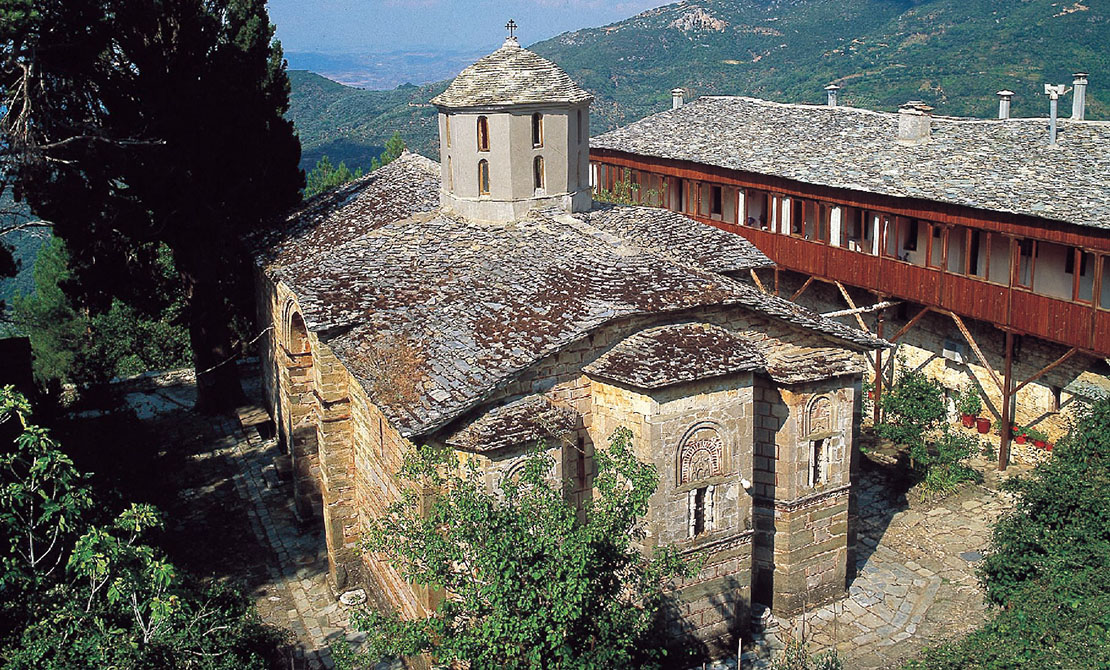
The Holy Monastery of Agios Lavrentios, located just outside the main settlement within a lush green and peaceful landscape, is the most important religious, historical, and architectural monument of the entire region. The monastery preserves its traditional fortress architecture, with high stone walls and inner courtyards that offer a sense of absolute spiritual elevation and peace to whoever passes through its gate. Apart from the monastery, Agios Lavrentios is full of historic churches and picturesque chapels that are worth visiting, such as the church of Agios Dimitrios in the central square and the church of Agios Athanasios, which was built in the 18th century and stands out for its elaborate wood-carved iconostasis. These religious monuments are not only places of worship, but also living monuments of art and history of the place, as they preserve rare icons, ecclesiastical relics, and manuscripts of great value that testify to the high intellectual level of the village’s residents over the centuries.
One of the elements that make Agios Lavrentios stand out on a global level and attract hundreds of visitors is the institution of the Music Village, an international cultural event that takes place every summer and transforms the village into a vast, open-air musical community. During the festival, hundreds of musicians, artists, academics, and art lovers from every corner of the planet gather in Agios Lavrentios, participating in seminars, workshops, theatrical performances, and spontaneous concerts in the cobbled paths, squares, and yards of the houses. This musical celebration abolishes the borders between different cultures and musical genres, combining classical music with traditional, jazz, and the experimental scene, and creates a unique atmosphere of celebration and creation that embraces the entire village, making a stay during this period a truly unforgettable and magical experience for every visitor.
Nature around Agios Lavrentios is blessed with a rare and lush vegetation that changes impressively in colors and aromas depending on the season of the year, offering a unique visual spectacle. The village is literally crowned by dense forests of beech, chestnut, oak, and wild cherry, while the vast olive groves spreading on the lower slopes bear witness to the long-standing agricultural tradition of the area in the production of excellent olive oil. The running waters from the Vryonas stream and the dozens of natural springs create a continuous gurgling that accompanies the visitor in every step, while the rich flora includes hundreds of species of wild herbs, flowers, and mushrooms that compose a unique ecosystem. This ideal natural environment offers a sense of absolute freedom and peace, making Agios Lavrentios an ideal destination for those who want to detoxify from the noise of the cities and breathe the fresh air of the mountain of the Centaurs.
For lovers of action, exercise, and adventure, Agios Lavrentios offers an excellent starting point for a plethora of outdoor activities and nature explorations. The village features a rich network of marked trails and old stone paths that are ideal for hiking, mountain running, mountain biking, and horseback riding. One of the most favorite and accessible hiking routes connects Agios Lavrentios with the neighboring village of Drakeia, offering a beautiful route through shaded forests and ravines, while other more demanding routes lead to Chania and the high peaks of the mountain. These tours give visitors the opportunity to discover hidden beauties of Pelion, stone bridges, and old chapels that are not accessible by car, making each excursion a unique experience of discovery and physical rejuvenation.
The gastronomic tradition of Agios Lavrentios is inextricably linked to the pure, local products of the Pelion land and the traditional recipes passed down with respect from generation to generation. In the traditional taverns and picturesque eating places of the village, you can try authentic flavors that will thrill you, such as the famous spetsofai with local sausage and peppers, boumbari, as well as handmade pies with rustic dough filled with wild mountain greens and local feta. All dishes are prepared with the exceptional extra virgin olive oil of the area and are ideally accompanied by local wine or tsipouro, while for the closing of the meal you must not miss the traditional spoon sweets, such as chestnut, walnut, and firiki, which the locals prepare with passion using the fruits that their land produces.
Staying in Agios Lavrentios offers a unique experience of warm hospitality, as most of the village’s guesthouses are housed in carefully restored stone mansions that combine the historical atmosphere with all modern comforts. Access to the village is extremely easy, as it is only 20 kilometers away from the city of Volos, about 350 kilometers from Athens, and 230 kilometers from Thessaloniki, making it an ideal destination both for a short weekend getaway and for multi-day vacations in every season of the year.
Whether you choose to visit in autumn with the golden leaves, in winter with the snow, or in spring and summer with the music and coolness, Agios Lavrentios will offer you a true sanctuary for the soul. So, prepare your luggage and surrender to the magic of this special Pelion settlement that promises to give you memories that you will keep forever in your heart.